On community greenhouses, the new movement class, banana beauty and friendship on the field
What is beauty? Every month PR Consultant & Trend Researcher Katrien Meermans asks the same question in four different ways. Not to find an answer but to rewire her thoughts and feelings.
1. Mental: grow your own belonging

The Veggery - A London greenhouse pavilion © Mike Massaro
Next to St Giles’ Cripplegate at the Barbican stands The Veggery, a hexagonal timber greenhouse built by Studio Folk Architects and Raskl. The project was created with the help and support of NLA and the Culture Mile Business Improvement District for this year’s London Festival of Architecture.
The festival itself wrapped up at the end of June, but the pavilion is staying put and on view through September, still doubling as a classroom, a lunch table and an events space. “It’s a space that does a lot,” says Patrick O’Keefe co-founder and director of Studio Folk Architects. “So we hope everyone can find something they enjoy in it.”
Most Londoners want outdoor space year-round, but roughly two in three admit they don’t know how to use it once summer ends. The Veggery is a place to grow plants. And to grow a little headspace, too. Just soil, a bench and permission to slow down.
2. Physical: discipline is the new luxury
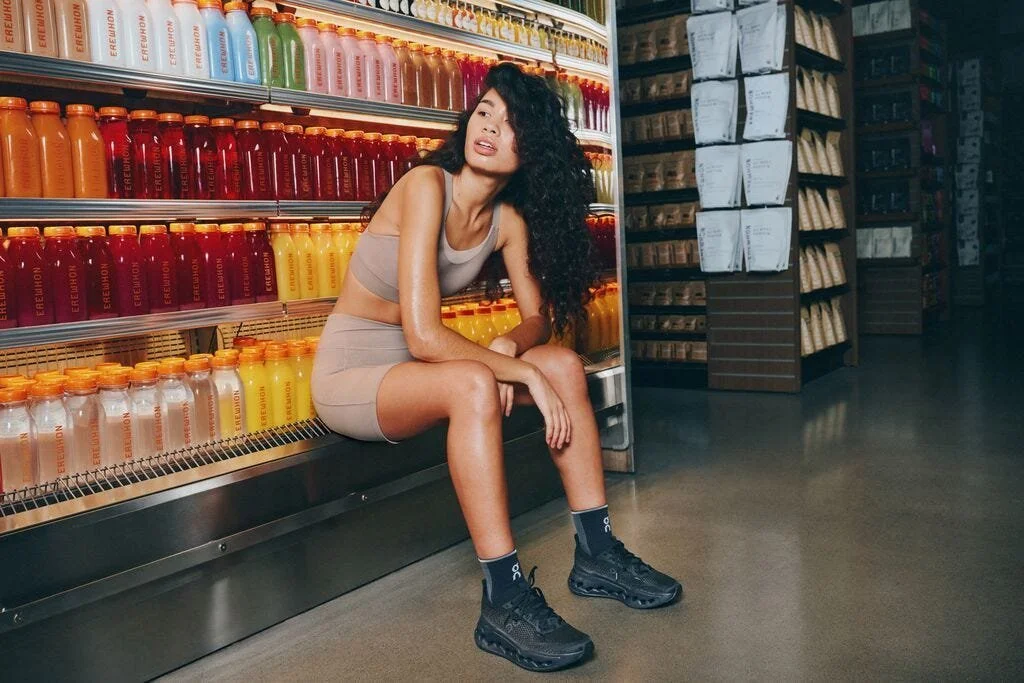
© On x Erewhon collab
According to David Allemann, co-founder of Swiss running brand On, a new consumer group is emerging: the ‘Movement Class’. For these consumers, vitality increasingly outranks traditional status symbols.
It isn’t just marketing language, writes author Oana Leonte. Investors are betting on the same idea. LVMH’s investment arm, L Catterton, is reportedly considering a stake in Hyrox, valuing the German company between 700 million and 1 billion euros. On, meanwhile, has expanded its partnership with organic grocery store and luxury wellness brand Erewhon beyond sneakers into juices, running gear and wellness events. And wearable company Whoop recently raised 575 million dollars at a 10.1 billion dollar valuation.
At the same time, there are signs that the culture of constant self-optimisation may be reaching its limits, she says. The Global Wellness Summit identified the ‘Over-Optimisation Backlash’ as one of its defining trends for 2026, pointing to a growing number of people choosing to step away from continuous tracking. Researchers have even coined a term ‘orthosomnia’ for insomnia driven by anxiety over sleep data.
It says something about how status is evolving. For some, it comes from visible discipline: races completed, recovery tracked, health metrics improved. For others, the new luxury may be opting out altogether. Deciding that not everything worth living needs to be measured.
3. Aesthetic: bananas are having a main-character moment

© Le Monde Gourmand - Banane Délice Eau de Parfum
Banana has quietly become fragrance’s fastest climber: up 171.7% year on year, according to Spate, ahead of coconut and cherry. TikTok drives most of it, with engagement up over 400%. American brands got there first: Kayali, Ellis Brooklyn and Oakcha all launched banana-led scents through 2024 and 2025. Europe followed this year, with Le Monde Gourmand‘s Banane Délice and Julliette has a gun‘s Banana Rush both landing in 2026. “Banana taps into both a feeling of nostalgia and playfulness, as well as a new cue of comfort,” says Le Monde Gourmand’s Ann Somma. rhode and Glow Recipe, meanwhile, are pushing the fruit into skincare and lip care.
Fresha’s Annabelle Taurua calls it ‘edible beauty’: products that feel holistic rather than clinical. Whether banana has matcha’s staying power is unclear. But its appeal was never really about the fruit. It’s about beauty still knowing how to be a little bit silly.
4. Social: making friends on the football field
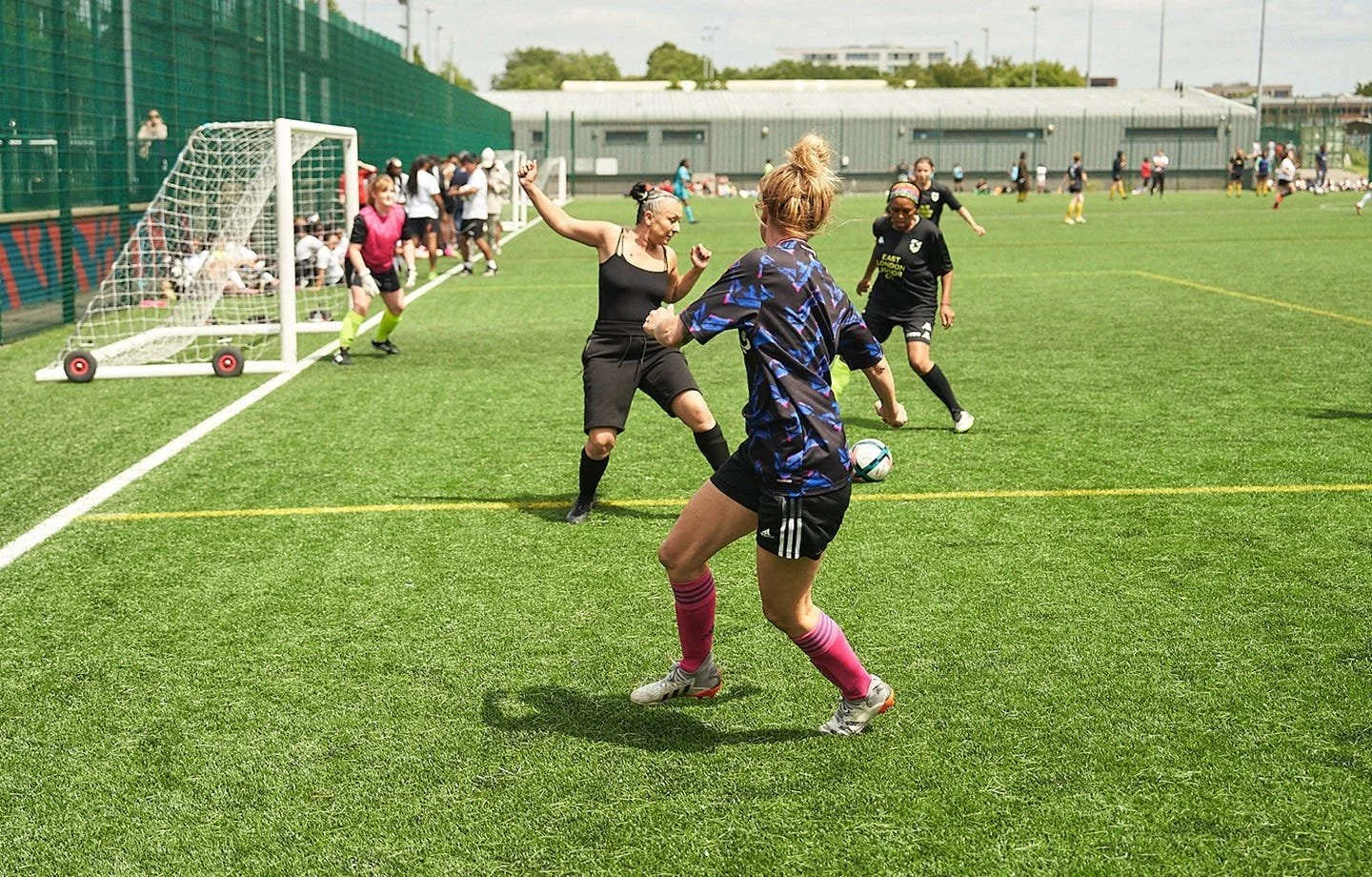
© Footy Addicts
Footy Addicts connects strangers across London, Birmingham, Manchester and Leicester for pick-up football games at short notice. No team required, no history needed, just a free evening. Since launching in 2013 it’s built up more than 312,000 registered players, filling a gap left by the UK’s vanishing ‘third spaces’.
“I do it because I know what it’s like to go into a game when you’re shy,” says Raul-Julian Grelet, a 28-year-old amateur player who organises matches through the app. “These sessions are open for you to just come and have a kickabout. Make some friends and get some exercise.”
It’s a reminder that loneliness rarely gets solved by another app built purely to talk. Sport still does something a chat function can’t: it gives people a reason to show up, and something to do while they get to know each other. What matters isn’t whether you can actually play. Nobody’s checking. Just come as you are.