What is beauty? Every month PR Consultant & Trend Researcher Katrien Meermans asks the same question in four different ways. Not to find an answer but to rewire her thoughts and feelings.
1. The bag you once hid
Since 2024, German discount supermarket ALDI SÜD has been collecting real customer memories for its #ALDIstory series. The latest goes back to the nineties, to the kids who got funny looks at school for carrying an ALDI bag. Today they’re adults, and in a five-part podcast hosted by journalist Miriam Davoudvandi, they look back on what it was like to grow up with the brand.
We shopped at ALDI too. Like half my friends, I had an Olé in my lunchbox instead of a real Leo. Checking out was a game: the cashier scanned so fast you had to race to bag everything. If I remember correctly, they knew every price by heart.
What I love about it is that those kids now get to tell the story themselves. As a child you don’t get a say in where your family shops. How you look back on it later is up to you. And these days, life is expensive for all of us, so we shop where it’s cheaper.
In Germany, more than 44% of shoppers named ALDI SÜD or ALDI NORD their favourite supermarket. We don’t hide it anymore. ALDI has even become a little cool: its ALDImania merch sells out in Germany, and in Belgium, back in 2019, you could buy a festival T-shirt with the their house brands’ logo’s on it. ALDI never tried to be something it isn’t. It owned its image, and that’s what people ended up liking about it.
2. Good food, great years
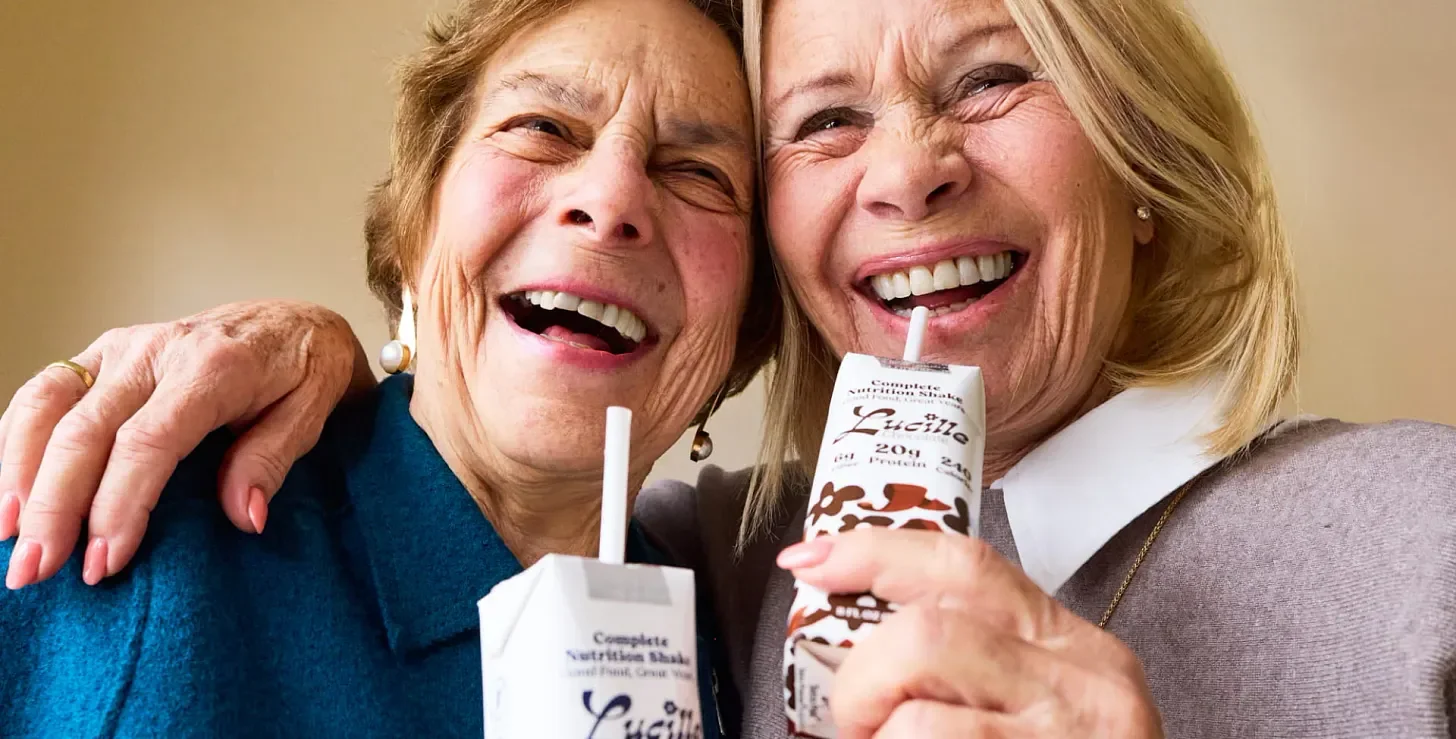
© Lucille: protein-rich nutrition shakes for older adults, wrapped in a colourful brand with a sense of humour.
When Jess Haghani’s grandmother Lucille came home from heart surgery, the family did what the doctors said and stocked up on the recommended shakes and packaged foods. Haghani, then doing her MBA at Harvard, read the labels. “The worst of the worst nutrition out there,” she told Entrepreneur. So she built Lucille, named after her grandmother: protein-rich nutrition shakes for older adults, wrapped in a colourful brand with a sense of humour.
So much of what's made for older people is designed at the level of price. It's beige, clinical, and does its function and nothing else. Without saying a word, design like that tells someone what they're worth. Lucille gets that getting older doesn't mean you stop wanting nice things, that you still have a sense of humour, and that colour still looks good on you.
3. The archive is open
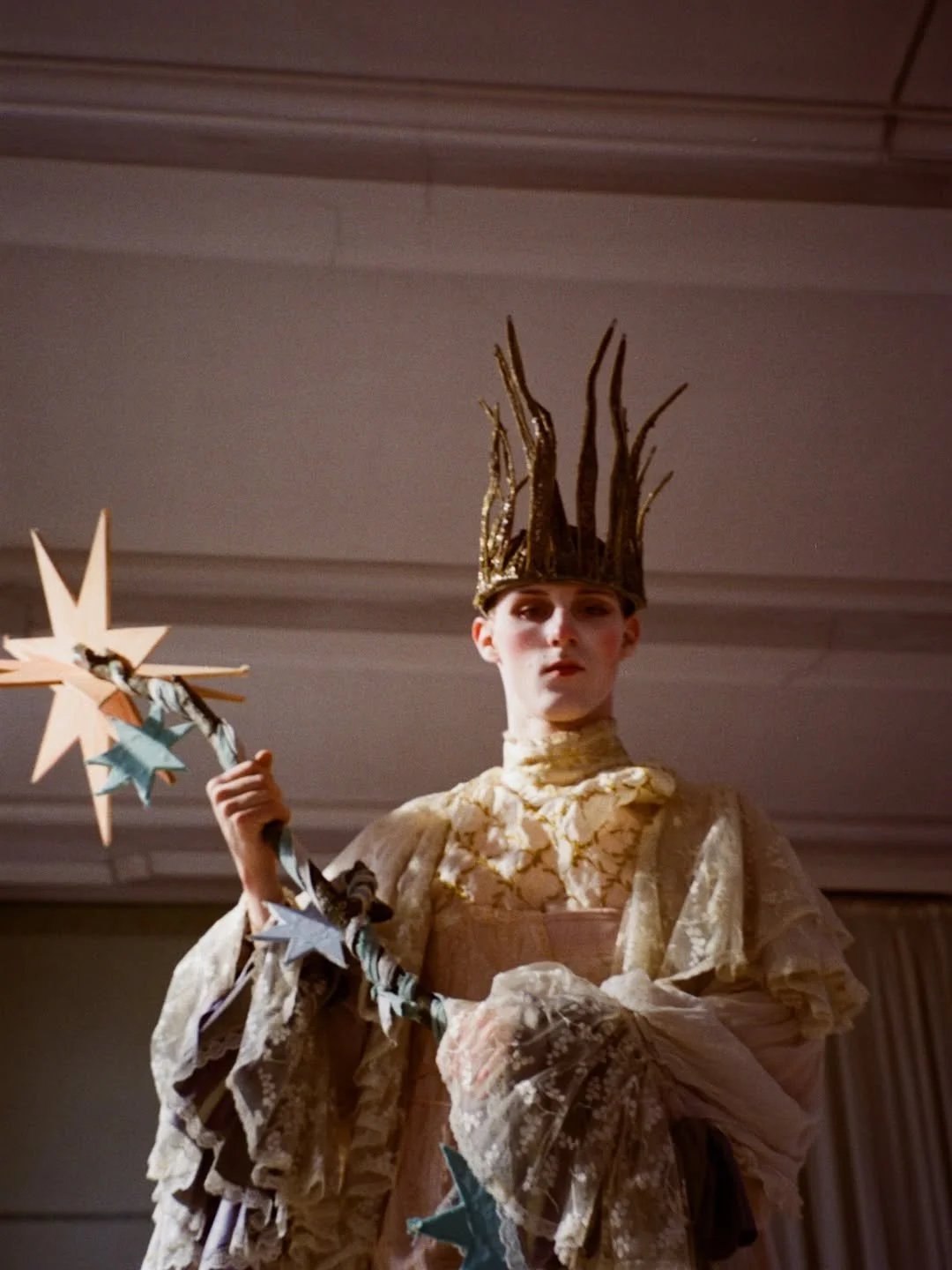
Costume design by Isabelle Van Renterghem for the movie Coward by director Lukas Dhondt
Earlier this year, Maison Margiela opened up its company Dropbox. MaisonMargiela/folders is a public archive anyone can browse. Its newest chapter is devoted to the Tokyo store in Ebisu, with a limited-edition zine of memories from staff and Tabi collectors. Margiela isn’t alone. Armani put more than 30,000 archive items online with Armani/Archivio, Valentino’s foundation opened PM23 in Rome, and Timberland showed its heritage workwear in a Paris Archive Gallery.
Just as I started an evening course to become an archivist, brands began opening their archives. I’d seen it as a career path for later, a way out. At its best, archive life looks like the job at the Georgia O’Keeffe Museum. Most of the time, though, you end up at the end of a long corridor, in a forgotten corner of a building. A little less romantic. But surrounded by all those objects and memories, maybe that’s not so bad either.
Without archives, we wouldn’t have films like Lukas Dhont’s Coward. It’s set on the Belgian front in 1916, where a young soldier, Pierre, meets the flamboyant Francis. Together with their comrades they put on a theatre revue against the misery of war. The story grew out of research into soldiers who really did stage shows at the front, often dressing up as the wives and mothers they’d left behind. The costume design by Isabel Van Renterghem and her team is so beautiful. That kind of work starts in an archive, with old photographs and someone patient enough to look closely.
The archive works both ways, too. Since 7 November, the Army Museum in Brussels has hosted a pop-up exhibition on Coward, with costumes, props and archive footage. I hope the costumes, sketches and notes in the margins end up in an archive afterwards, so that in another hundred years someone else can go looking.
4. Faith, by choice
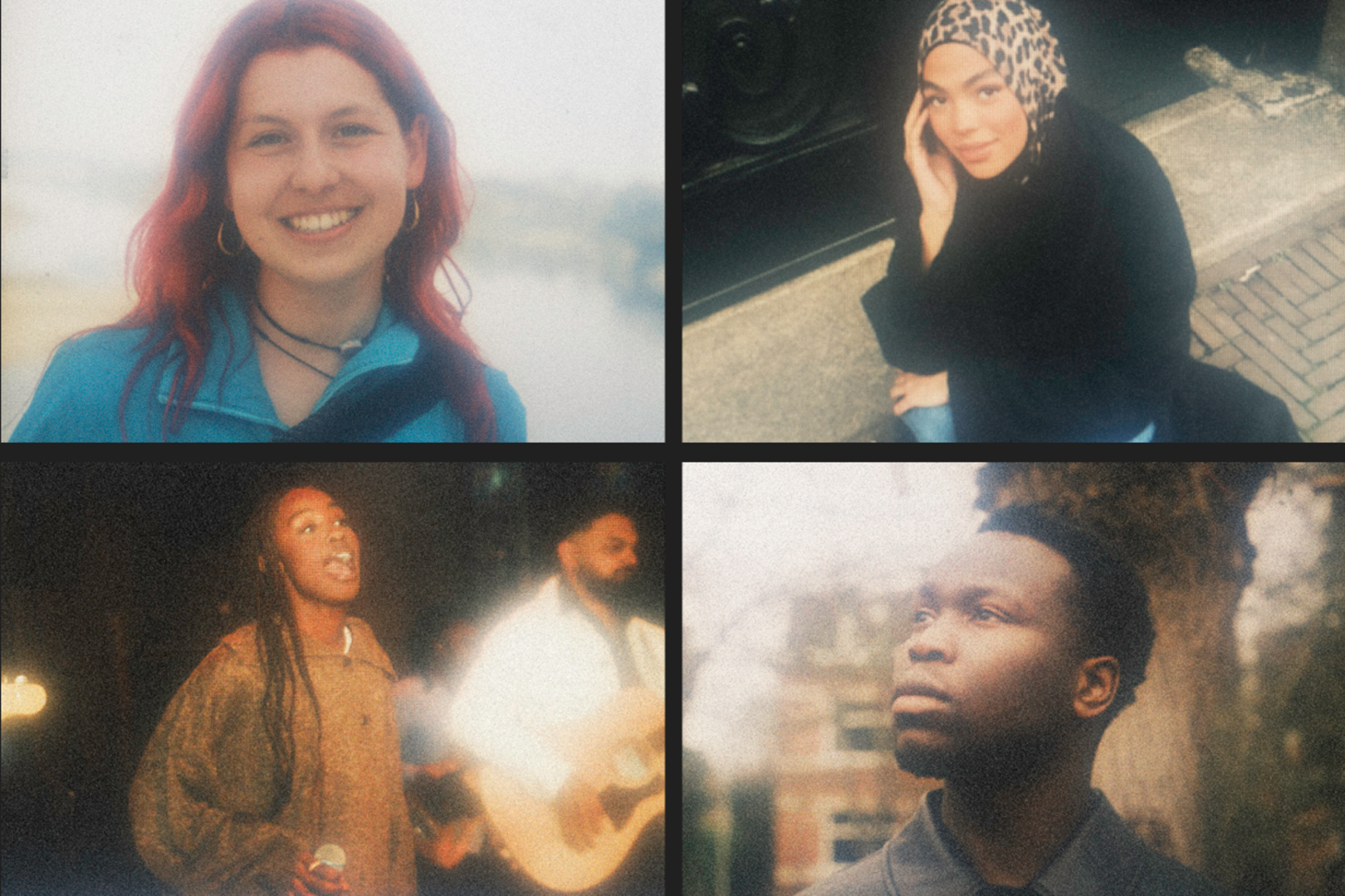
Noël Sergeant, a devout believer and junior editor at De Standaard, talks to four fellow believers of his own age in the podcast series ‘Niet te geloven’.
In 2026, more than 21,000 adults and teenagers were baptised Catholic in France. Three times as many as ten years ago. More than a third come from families that were indifferent or even hostile to religion.
“Religion is no longer an inheritance received at birth but has become an individual choice,” historian Charles Mercier told France 24. For these young people, faith is something they found themselves, apart from what their parents expected of them.
Closer to home, the picture is more nuanced. Research by the Flemish youth research platform JOP among young people in Antwerp, Brussels and Ghent found no real religious revival. Secularisation is still growing. But within the smaller group that does believe, mostly Catholic and Muslim young people, more of them now go to services. They’re also more visible, on social media too, which makes it look like more. Religion sociologist Wim Vandewiele (KU Leuven): “We’re not living in a time of revival, but of reinterpretation.” Which makes the more interesting question not how many young people believe, but why. It’s the one Noël Sergeant asks his peers in the De Standaard podcast Niet te geloven.
Earlier this year, we talked about faith and rituals with our intern Maryam, who is Muslim. Around the same time, I was reading Alain de Botton’s Religion for Atheists: even if you don’t believe, there’s much to learn from religion’s rituals, community, and room for art and for learning how to live. Then in August, artist Marina Woisky stayed with us. She lives in Brazil and practises Candomblé, a religion I knew almost nothing about. At its heart are the orixás, deities linked to nature, like Iemanjá of the sea and Xangô of thunder and justice. I can’t fully explain why it spoke to me so much.
I’m searching myself. I don’t have an answer yet. But I do understand.